Creamy Broccoli & Potato Vegetable Casserole – Low-Calorie, High-Protein, Healthy Dinner Recipe
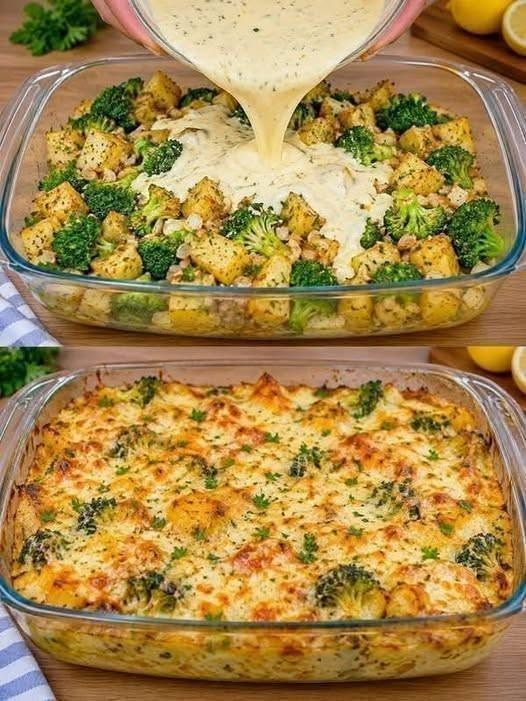
This creamy broccoli and potato casserole is a delicious, comforting vegetable dish made with tender potatoes, fresh broccoli, a creamy garlic-herb sauce, and a golden layer of melted cheese. It’s rich, satisfying, and full of flavor without needing heavy cream or excessive butter.
It’s perfect for lunch or dinner, meal preparation, or a healthy family side dish. The lighter sauce makes it easier to enjoy a comforting casserole while keeping portions and calories under control.
Note: This is a recreated recipe based on the food shown in your picture. The exact original ingredients are not provided.
Recipe Details
PREP TIME
15 minutes
COOK TIME
35–40 minutes
TOTAL TIME
55 minutes
SERVINGS
6 servings
DIFFICULTY
Easy
METHOD
Oven-baked
Ingredients
For the vegetable casserole
-
3 medium potatoes, peeled and cut into small cubes (approximately 450 g).
-
3 cups fresh broccoli florets.
-
1 small onion, finely chopped.
-
2 cloves garlic, minced.
-
1 teaspoon olive oil.
-
½ teaspoon salt, or to taste.
-
½ teaspoon black pepper.
-
1 teaspoon paprika.
-
½ teaspoon dried oregano.
-
½ teaspoon Italian seasoning.
-
¼ teaspoon garlic powder.
For the creamy garlic sauce
-
¾ cup plain nonfat Greek yogurt.
-
½ cup low-fat milk.
-
2 tablespoons light cream cheese.
-
1 teaspoon Dijon mustard (optional).
-
1 clove garlic, minced.
-
½ teaspoon dried parsley.
-
¼ teaspoon black pepper.
-
¼ teaspoon salt.
-
¼ teaspoon onion powder.
For the cheesy topping
-
½ cup shredded part-skim mozzarella cheese.
-
2 tablespoons grated Parmesan cheese.
-
1 tablespoon fresh chopped parsley.
Instructions
Step 1: Prepare the vegetables
-
Preheat your oven to 375°F (190°C).
-
Wash the potatoes thoroughly, peel them if desired, and cut them into small, evenly sized cubes.
-
Wash the broccoli and divide it into bite-sized florets.
-
Finely chop the onion and mince the garlic.
-
Make sure the vegetables are reasonably similar in size so they cook evenly.
Step 2: Partially cook the potatoes
-
Bring a large pot of salted water to a boil.
-
Add the cubed potatoes and cook for approximately 7–9 minutes.
-
The potatoes should be slightly tender but not completely cooked.
-
Drain the potatoes thoroughly and allow excess moisture to evaporate.
This step helps ensure that the potatoes become soft and fluffy inside the casserole without requiring excessive baking time.
Step 3: Prepare the broccoli
-
Bring a separate pot of water to a boil.
-
Add the broccoli florets and blanch for approximately 2–3 minutes.
-
Drain immediately.
-
Rinse briefly with cold water to preserve the broccoli’s bright green color.
-
Set aside.
Avoid overcooking the broccoli because it will continue cooking in the oven.
Step 4: Season the vegetables
-
Place the partially cooked potatoes and broccoli in a large mixing bowl.
-
Add the chopped onion and minced garlic.
-
Drizzle with olive oil.
-
Sprinkle in paprika, oregano, Italian seasoning, garlic powder, salt, and black pepper.
-
Toss everything gently until the vegetables are evenly coated.
Step 5: Make the creamy sauce
-
Add the Greek yogurt to a medium-sized mixing bowl.
-
Pour in the low-fat milk.
-
Add the light cream cheese.
-
Mix until the sauce becomes smooth and creamy.
-
Add Dijon mustard, minced garlic, parsley, onion powder, salt, and black pepper.
-
Whisk everything together until fully combined.
If the sauce is too thick, add another tablespoon or two of milk until it reaches a pourable consistency.
Important: Avoid boiling the yogurt sauce, as excessive heat can cause it to separate. Mixing it well and baking at a moderate temperature helps maintain a creamy texture.
Step 6: Assemble the casserole
-
Lightly grease a 9 × 13-inch baking dish with cooking spray or a small amount of olive oil.
-
Spread the seasoned potato and broccoli mixture evenly inside the dish.
-
Pour the prepared creamy garlic sauce over the vegetables.
-
Gently toss or spread the sauce so it reaches all the vegetables.
-
Sprinkle mozzarella cheese evenly over the top.
-
Finish with grated Parmesan cheese.
Step 7: Bake until golden
-
Place the baking dish in the preheated oven.
-
Bake uncovered for approximately 25–30 minutes.
-
Check that the potatoes are fork-tender.
-
The sauce should be bubbling gently around the edges.
-
The cheese should become melted, golden, and lightly browned.
-
If you prefer a crispier top, broil for an additional 1–2 minutes, watching carefully.
Step 8: Rest and serve
-
Remove the casserole from the oven.
-
Allow it to rest for approximately 5–10 minutes.
-
Sprinkle fresh chopped parsley over the top.
-
Serve warm while the cheese is melted and the sauce is creamy.
Enjoy this comforting vegetable casserole as a satisfying lunch, dinner, or meal-prep dish!
Nutritional Information
Estimated values per serving, assuming 6 servings and the ingredients listed above.
| Nutrient | Approximate amount |
|---|---|
| Calories | 210–240 kcal |
| Protein | 12–14 g |
| Carbohydrates | 27–30 g |
| Fat | 6–8 g |
| Fiber | 4–5 g |
| Sugar | 4–5 g |
| Sodium | 350–450 mg |
Weight-management note: This casserole can fit into a calorie-controlled eating plan because it includes fiber-rich vegetables, satisfying potatoes, and protein from Greek yogurt and cheese. However, no individual food guarantees rapid weight loss. Your overall calorie intake, portion sizes, and activity levels matter.
Nut Information & Allergy Guide
This recipe does not require any tree nuts or peanuts.
| Nut or allergen | Information |
|---|---|
| Almonds | Not included |
| Walnuts | Not included |
| Cashews | Not included |
| Pecans | Not included |
| Pistachios | Not included |
| Hazelnuts | Not included |
| Peanuts | Not included |
| Macadamia nuts | Not included |
| Brazil nuts | Not included |
| Coconut | Not included |
Potential allergens:
-
Milk and dairy: Greek yogurt, milk, cream cheese, mozzarella, and Parmesan.
-
Mustard: Present if using Dijon mustard.
Cross-contamination warning: If preparing this dish for someone with a nut allergy, check the packaging of cheese, seasonings, sauces, and other ingredients for nut cross-contact warnings. Naturally nut-free ingredients are not automatically guaranteed to be manufactured in nut-free facilities.
Nut-free substitutions
-
Use certified nut-free ingredients if required for an allergy.
-
For a dairy-free version, substitute unsweetened soy yogurt and suitable dairy-free cheese.
-
Avoid almond milk or cashew cream when preparing a nut-free version.
Helpful Cooking Tips
-
Cut potatoes evenly: Small cubes cook faster and more consistently.
-
Don’t overcook broccoli: Blanching briefly helps preserve its texture.
-
Use Greek yogurt: It creates a creamy sauce while adding protein.
-
Choose reduced-fat cheese: This helps reduce calories without sacrificing too much flavor.
-
Season generously: Garlic, paprika, oregano, and parsley give the casserole a delicious savory flavor.
-
Let it rest: Resting allows the sauce to thicken slightly before serving.
-
Avoid excess sauce: Too much liquid can make the casserole watery.
Storage and Meal Prep
Refrigerator: Store leftovers in an airtight container for up to 3–4 days.
Freezer: You can freeze individual portions for approximately 1–2 months, although the yogurt-based sauce may change texture slightly after thawing.
Reheating in the oven: Cover with foil and reheat at 325°F (165°C) until thoroughly hot.
Microwave: Reheat individual portions in 1-minute intervals, stirring or checking between intervals.
Meal preparation: Divide the casserole into individual containers after cooling. Refrigerate promptly and use throughout the next few days.
Frequently Asked Questions (Q&A)
Q1: Is broccoli and potato casserole good for weight loss?
It can be a good choice for a weight-management diet. Broccoli provides fiber and nutrients, while potatoes provide satisfying carbohydrates. Using Greek yogurt and reduced-fat cheese helps keep the recipe lighter.
Q2: Can I eat this vegetable casserole every day?
You can include it regularly as part of a balanced diet. However, it’s best to vary your vegetables and protein sources throughout the week.
Q3: Can I make this casserole without cheese?
Yes! Simply omit the mozzarella and Parmesan. You can add nutritional yeast for a savory, cheesy flavor if desired.
Q4: Can I use frozen broccoli?
Absolutely. Thaw it first and drain excess water before adding it to the casserole.
Q5: Can I replace potatoes with cauliflower?
Yes. Cauliflower is a lower-carbohydrate alternative. Reduce the initial cooking time because cauliflower cooks more quickly than potatoes.
Q6: How can I make this casserole higher in protein?
Add cooked chicken breast, turkey, tofu, or extra Greek yogurt. These ingredients increase protein and make the casserole more filling.
Q7: Can I prepare this recipe ahead of time?
Yes. Assemble the vegetables and sauce in the baking dish, cover, and refrigerate for up to 24 hours. Add the cheese topping shortly before baking. You may need a few extra minutes of cooking time if baking directly from the refrigerator.
Q8: Why is my casserole watery?
Broccoli can release excess moisture, especially if it is not drained properly. Make sure the vegetables are well-drained before adding the sauce.
Q9: Can I make it without an oven?
Yes. You can cook the vegetables in a covered deep skillet over low heat until tender. Add the sauce and cheese near the end and cover until the cheese melts.
Q10: Is this recipe gluten-free?
The listed ingredients can be gluten-free, but always check the labels of mustard, seasonings, and cheese to ensure they are certified or suitable for your dietary needs.
Q11: Can I add other vegetables?
Definitely! Bell peppers, zucchini, carrots, mushrooms, spinach, and green beans all work well.
Q12: Is this casserole suitable for children?
Yes. It is a family-friendly vegetable dish. You can reduce the garlic and pepper for a milder flavor.
Serving Suggestions
Serve this creamy vegetable casserole with:
-
A fresh cucumber and tomato salad.
-
Grilled chicken breast.
-
A bowl of vegetable soup.
-
Roasted fish or salmon.
-
A simple green salad with lemon dressing.
Final Recipe Note: The best part of this casserole is its creamy texture, tender potatoes, flavorful broccoli, and golden cheesy topping. It’s a wonderful way to make vegetables more enjoyable while keeping the ingredients simple and adaptable to your nutritional goals.