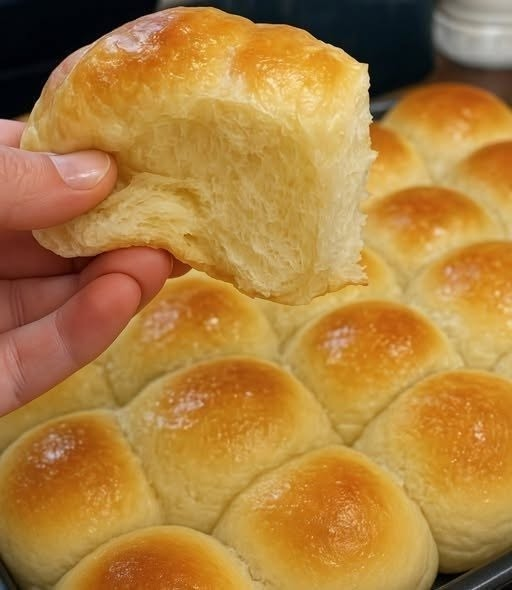
Soft and Buttery Homemade Dinner Rolls
Fluffy • Buttery • Golden • Homemade Bakery-Style
These Soft and Buttery Homemade Rolls are everything you want in a perfect dinner roll! They’re incredibly fluffy, tender, and light, with a beautiful golden-brown top and a soft, pillowy inside that practically melts in your mouth.
Made with simple pantry ingredients, these homemade rolls have a rich buttery flavor and a delicate sweetness. They’re perfect for holiday dinners, family gatherings, Sunday meals, or anytime you want fresh, homemade bread straight from the oven.
Once you try these rolls, you’ll want to make them again and again!
Preparation Time: 20 minutes
Rising Time: 1 hour 30 minutes
Baking Time: 18–22 minutes
Total Time: Approximately 2 hours 15 minutes
Servings: 15 rolls
Difficulty: Easy to Moderate
Ingredients
For the Dough
-
4 cups (500 g) all-purpose flour or bread flour
-
1 cup (240 ml) warm whole milk
-
2¼ teaspoons (7 g) active dry yeast
-
¼ cup (50 g) granulated sugar
-
1 large egg, room temperature
-
¼ cup (56 g) unsalted butter, softened
-
1 teaspoon salt
For the Egg Wash
-
1 egg
-
1 tablespoon milk
For the Buttery Topping
-
3 tablespoons unsalted butter, melted
-
1 teaspoon honey (optional)
-
Pinch of salt (optional)
Instructions
Step 1: Activate the yeast
Pour the warm milk into a small bowl.
The milk should be warm to the touch, approximately 105–110°F (40–43°C), but not hot.
Add the sugar and active dry yeast.
Stir gently and allow the mixture to sit for 5–10 minutes until foamy.
This indicates that the yeast is active and ready to use.
Step 2: Prepare the dough
In a large mixing bowl, combine the flour and salt.
Add the activated yeast mixture and egg.
Mix until a rough dough begins to form.
Add the softened butter gradually, mixing until incorporated.
The dough may initially look sticky, but it will become smoother as you knead it.
Step 3: Knead until smooth
Transfer the dough to a lightly floured work surface.
Knead by hand for approximately 10–12 minutes, or use a stand mixer with a dough hook for 7–9 minutes.
The dough should become soft, elastic, and slightly tacky.
Avoid adding too much extra flour because this can make the finished rolls dry and dense.
Step 4: First rise
Lightly grease a large bowl with butter or oil.
Place the dough inside and turn it once to coat the surface.
Cover with a clean kitchen towel or plastic wrap.
Allow the dough to rise in a warm, draft-free place for approximately 60–90 minutes, or until doubled in size.
Step 5: Shape the rolls
Gently punch down the risen dough to release excess air.
Transfer it to a clean work surface.
Divide the dough into 15 equal portions.
Shape each portion into a smooth ball by pulling the edges underneath and rolling gently against the work surface.
Arrange the dough balls in a greased 9 × 13-inch baking dish, leaving a little space between them.
Step 6: Second rise
Cover the baking dish loosely with a clean kitchen towel.
Allow the rolls to rise for another 30–45 minutes, or until noticeably puffy and touching one another.
This second rise is essential for achieving that beautiful soft, fluffy texture.
Step 7: Prepare the egg wash
In a small bowl, whisk together one egg and one tablespoon of milk.
Gently brush the tops of the risen rolls with the egg wash.
This creates a beautiful glossy, golden-brown finish during baking.
Step 8: Bake the rolls
Preheat your oven to 350°F (175°C).
Place the baking dish on the center rack.
Bake for approximately 18–22 minutes, or until the tops are golden brown and the rolls are fully cooked.
If the tops brown too quickly, loosely cover them with aluminum foil during the final minutes.
Step 9: Add the buttery topping
While the rolls are still hot, melt 3 tablespoons of butter.
Stir in the honey and a small pinch of salt if desired.
Brush the melted butter generously over the tops of the freshly baked rolls.
Allow the butter to soak into the warm bread.
Step 10: Cool and serve
Let the rolls rest for approximately 5–10 minutes before serving.
Pull them apart while still warm and enjoy their soft, fluffy centers and buttery golden tops!
Nutrition Information
Estimated per roll, based on 15 rolls.
| Nutrient | Amount |
|---|---|
| Calories | 190 kcal |
| Protein | 5 g |
| Carbohydrates | 30 g |
| Dietary Fiber | 1 g |
| Total Sugars | 5 g |
| Fat | 6 g |
| Saturated Fat | 3.5 g |
| Cholesterol | 25 mg |
| Sodium | 190 mg |
Nutrition values are approximate and include the egg wash and buttery topping.
Nut Information & Allergen Guide
Does this recipe contain nuts?
No. Traditional homemade buttery dinner rolls do not require peanuts or tree nuts.
Nut-free ingredients:
-
All-purpose flour
-
Milk
-
Yeast
-
Sugar
-
Eggs
-
Butter
-
Salt
-
Honey
Potential allergens:
-
Wheat/gluten: All-purpose flour contains wheat and gluten.
-
Milk: Whole milk and butter contain dairy.
-
Eggs: Used in the dough and egg wash.
-
Peanuts and tree nuts: Not required in the recipe, but check ingredient labels for cross-contact warnings.
Nut-free alternative: The recipe is naturally nut-free when prepared with suitable ingredients and clean equipment. For dairy-free rolls, use plant-based milk and a suitable dairy-free butter alternative.
Tips for Extra Soft and Fluffy Rolls
-
Use warm milk: Milk that is too hot can kill the yeast.
-
Don’t add too much flour: Slightly tacky dough produces softer rolls.
-
Knead properly: Good gluten development gives the bread its beautiful stretchy texture.
-
Allow enough rising time: Let the dough double in size rather than relying only on the clock.
-
Shape evenly: Equal-sized dough balls ensure even baking.
-
Don’t skip the second rise: This creates the light, airy interior.
-
Brush with butter immediately: Adding butter while the rolls are hot keeps the crust soft.
-
Avoid overbaking: Remove the rolls once they’re golden and cooked through.
Frequently Asked Questions (Q&A)
Q1: Why are my homemade rolls not soft and fluffy?
This can happen if too much flour is added, the dough isn’t kneaded sufficiently, or the rolls don’t rise long enough. Use a soft, slightly tacky dough and allow adequate rising time.
Q2: Can I use instant yeast instead of active dry yeast?
Yes! Use the same quantity of instant yeast. You can mix it directly with the flour instead of activating it separately.
Q3: Can I make these rolls without eggs?
Yes. You can omit the egg and add approximately 2 tablespoons of extra milk if needed. The rolls may have a slightly different texture.
Q4: Can I use bread flour instead of all-purpose flour?
Absolutely! Bread flour produces slightly chewier, more elastic rolls, while all-purpose flour creates a softer, tender texture.
Q5: Can I prepare the dough the night before?
Yes! After kneading, place the dough in a covered bowl and refrigerate overnight. The next day, allow it to warm slightly, shape the rolls, and let them rise until puffy before baking.
Q6: Can I freeze homemade dinner rolls?
Yes! Allow the baked rolls to cool completely, then place them in a freezer-safe bag or container. Freeze for up to 2–3 months.
Q7: How do I reheat dinner rolls?
Wrap the rolls loosely in aluminum foil and warm in a 300°F (150°C) oven for approximately 8–10 minutes. Brush with a little butter before serving.
Q8: Why didn’t my dough rise?
Possible reasons include expired yeast, milk that was too hot, or a room that was too cold. Always check that your yeast becomes foamy when activated.
Q9: Can I make smaller dinner rolls?
Yes! Divide the dough into 20–24 smaller portions. Reduce the baking time slightly and check for a golden-brown finish.
Q10: Can I make these rolls sweeter?
Yes! Increase the sugar to ⅓ cup for a slightly sweeter, bakery-style dinner roll.
Q11: Why are my rolls dense?
Dense rolls often result from adding too much flour, insufficient kneading, or not allowing enough time for the dough to rise.
Q12: How should I store leftover rolls?
Store completely cooled rolls in an airtight container or bread bag at room temperature for 2–3 days. Refrigeration is generally not recommended because it can make bread stale faster.
Q13: Can I make these rolls without a stand mixer?
Absolutely! A large mixing bowl, wooden spoon, and your hands are all you need. Knead by hand until the dough is smooth and elastic.
Q14: What can I serve with homemade dinner rolls?
These rolls are delicious with:
-
Creamy chicken soup
-
Beef stew
-
Roasted chicken
-
Garlic butter
-
Homemade gravy
-
Pasta dishes
-
Mashed potatoes
-
Honey butter
Q15: Can I brush the rolls with garlic butter?
Definitely! Mix melted butter with minced garlic and chopped parsley. Brush over the warm rolls for delicious garlic butter dinner rolls.
Serving Suggestions
-
Classic butter rolls: Serve warm with salted butter.
-
Honey butter rolls: Mix softened butter with honey for a sweet topping.
-
Garlic butter rolls: Add minced garlic and parsley to melted butter.
-
Sandwich rolls: Slice horizontally and fill with ham, chicken, or cheese.
-
Holiday dinner: Serve alongside roasted turkey, mashed potatoes, and gravy.
Final Result: Beautiful golden-brown homemade rolls with a soft, pillowy interior, delicate sweetness, and rich buttery flavor. Perfect for pulling apart while warm and sharing with family at any meal!