Pico de Gallo
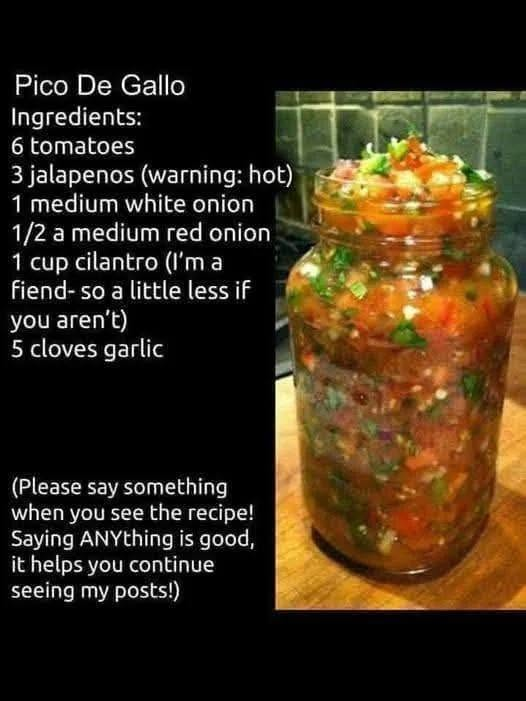
Fresh, chunky, and full of bright tomato, onion, jalapeño, cilantro, and garlic flavor. Perfect with tacos, grilled chicken, eggs, salads, or as a dip with tortilla chips.
Ingredients
- 6 ripe tomatoes, diced
- 3 jalapeños, finely chopped
- 1 medium white onion, finely diced
- ½ medium red onion, finely diced
- 1 cup fresh cilantro, chopped
- 5 cloves garlic, finely minced
- 2 tablespoons fresh lime juice
- ½ teaspoon salt, or to taste
- ¼ teaspoon black pepper, optional
Instructions
- Prepare the tomatoes: Dice the tomatoes into small, even pieces. If they’re very juicy, remove some of the seeds and excess liquid.
- Chop the vegetables: Finely dice both onions and jalapeños. For a milder salsa, remove the jalapeño seeds and membranes.
- Combine: Add tomatoes, jalapeños, white onion, red onion, cilantro, and garlic to a large bowl.
- Season: Add lime juice, salt, and black pepper.
- Mix gently: Toss everything together until evenly combined.
- Rest: Let the pico de gallo sit for 15–20 minutes before serving so the flavors can blend.
- Taste and adjust: Add more lime juice or salt if needed.
Tips
- For the best flavor, use ripe, firm tomatoes.
- For less heat, use 1 jalapeño and remove the seeds.
- For extra heat, keep the seeds and add another jalapeño.
- Don’t overmix—the tomatoes should remain chunky.
- Fresh lime juice gives the best flavor.
Storage
Refrigerate in an airtight container for up to 2–3 days. The tomatoes will release more liquid as they sit, so stir before serving.
Nutrition
Approximate for the entire batch:
- Calories: 300–350
- Protein: 10–12 g
- Carbohydrates: 65–75 g
- Fiber: 15–18 g
- Fat: 2–3 g
Per ½-cup serving, approx
Q&A
How many servings does this recipe make?
This recipe makes approximately 8–10 servings, depending on how generously it is portioned.
How many calories are in ½ cup?
One ½-cup serving contains approximately 35–45 calories.
Is Pico de Gallo low carb?
Yes. It is naturally low in carbohydrates compared with many prepared dips and sauces. Most of the carbs come from the tomatoes and onions.
Is Pico de Gallo keto-friendly?
It can fit into a keto-style meal when eaten in moderate portions. Keep in mind that the tomatoes and onions still contribute some carbohydrates.
Can I make it less spicy?
Yes. Use fewer jalapeños and remove the seeds and inner membranes before chopping.
How can I make it spicier?
Keep the jalapeño seeds and membranes, or add an extra jalapeño. You can also add a pinch of cayenne pepper.
Can I use red onion instead of white onion?
Yes. Red onion gives the salsa a slightly sweeter and sharper flavor. You can also use only red onion if preferred.
Can I add avocado?
Yes, but add diced avocado right before serving because it can brown and become soft during storage.
Can I make Pico de Gallo ahead of time?
Yes. Making it 15–30 minutes ahead allows the flavors to blend. For the freshest texture, don’t make it more than a day ahead.
Why does my Pico de Gallo become watery?
Tomatoes naturally release liquid after they’re chopped and salted. For a less watery salsa, remove some tomato seeds and excess juice before mixing.
Can I use canned tomatoes?
Fresh tomatoes are recommended for traditional Pico de Gallo. Canned tomatoes tend to be softer and release more liquid.
How long does Pico de Gallo last?
Keep it refrigerated in an airtight container and use within 2–3 days for the best quality.
Can I freeze Pico de Gallo?
Freezing is not recommended because the tomatoes and other fresh vegetables become soft and watery after thawing.
What can I serve it with?
Pico de Gallo is excellent with:
- Tacos and burrito bowls
- Grilled chicken
- Eggs and omelets
- Grilled fish
- Salads
- Baked potatoes
- Avocado
- Tortilla chips
- Lettuce wraps
Can I add other ingredients?
Yes. Fresh lime zest, diced cucumber, corn, avocado, or a little chopped green onion can be added for different variations.
Is it healthy?
It provides vegetables, fiber, vitamin C, and other micronutrients while being naturally low in fat and calories. The exact nutrition depends on the quantities and ingredients used.