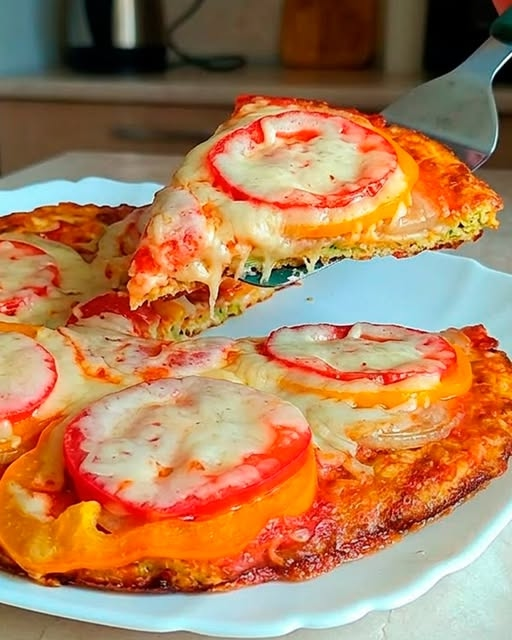
This delicious homemade pizza is a great alternative to traditional flour-based pizza. It features a vegetable-based crust, rich tomato sauce, juicy tomato slices, colorful bell peppers, and melted mozzarella cheese. There is no flour to knead and no yeast dough to prepare!
The recipe below uses cauliflower and egg to create a firm, golden crust similar to the one shown in your picture. It’s a satisfying way to add more vegetables to pizza night.
Preparation
15 minutes
Cooking
30–40 minutes
Yield
1 medium pizza
Difficulty
Easy
1. Ingredients
A. Flourless vegetable crust

- 400 g cauliflower florets
- 1 large egg
- ½ cup (50–60 g) shredded mozzarella
- 2 tablespoons grated Parmesan
- ½ teaspoon garlic powder
- ½ teaspoon dried oregano
- ¼ teaspoon salt
- ¼ teaspoon black pepper
- 1 teaspoon olive oil for greasing
B. Pizza sauce
- ⅓ cup (80 g) tomato passata or thick tomato sauce
- 1 small garlic clove, finely minced
- ½ teaspoon dried oregano
- ¼ teaspoon black pepper
- A pinch of salt
- ½ teaspoon olive oil
C. Toppings

- 1 medium tomato, sliced
- ½ red bell pepper, sliced into rings
- ½ yellow bell pepper, sliced into rings
- ¾ cup (75–90 g) shredded mozzarella
- 1 tablespoon grated Parmesan, optional
- Fresh basil or dried oregano, to taste
- Chili flakes, optional
2. Step-by-step instructions

Step 1 — Prepare the cauliflower
- Preheat your oven to 220°C (425°F).
- Chop the cauliflower into small florets.
- Pulse in a food processor until it resembles fine rice.
- Microwave for 5–7 minutes or steam until tender.
- Allow it to cool enough to handle, then squeeze out as much moisture as possible using a clean kitchen towel.
Key secret: Removing excess water is essential for a crust that holds together instead of becoming soggy.

Step 2 — Make the crust mixture
Combine the drained cauliflower with egg, mozzarella, Parmesan, garlic powder, oregano, salt, and pepper.
Mix thoroughly until the ingredients bind together. No kneading, flour, or yeast is required.

Step 3 — Shape and bake the crust
- Line a baking tray with parchment paper.
- Press the mixture into a circle approximately 25–28 cm (10–11 inches) wide.
- Keep the thickness even, around 5–7 mm.
- Bake for 20–25 minutes, until the surface is golden and the edges are firm.
Let the crust firm up before adding toppings.

Step 4 — Add the sauce
Mix the tomato passata with garlic, oregano, pepper, salt, and olive oil.
Spread a thin, even layer over the baked crust, leaving a small border around the edge. Avoid excess sauce, which can soften the crust.

Step 5 — Add the cheese and vegetables
- Sprinkle mozzarella over the sauce.
- Arrange tomato slices and red and yellow bell pepper rings.
- Add Parmesan and oregano if desired.
Pat the tomato slices dry before adding them to reduce excess moisture.

Step 6 — Bake the finished pizza
Return the pizza to the oven for 8–12 minutes, until the cheese is bubbling and the vegetables are tender.
For a more golden top, broil for the final 1–2 minutes, watching carefully to prevent burning.

Step 7 — Rest and serve
Let the pizza rest for 3–5 minutes. Slice with a sharp pizza cutter and garnish with fresh basil or chili flakes.
Serve warm with a green salad or roasted vegetables.
3. What makes this pizza a healthier choice?
- More vegetables: Cauliflower provides fiber and several vitamins and minerals.
- No refined flour: The crust contains no wheat flour.
- Protein: Eggs and cheese contribute protein.
- Flexible toppings: You can add mushrooms, onions, spinach, or other vegetables.
- Adjustable sodium: Use less salt and choose lower-sodium cheese and tomato sauce.
- Portion-friendly: Pair a couple of slices with salad for a balanced meal.
Note that “healthy” depends on the portion size, ingredients, and individual dietary needs. Cheese still contributes saturated fat and sodium, and cauliflower crust is not automatically lower in calories than every traditional pizza.
4. Nutrition facts
Approximate nutrition for the entire pizza, assuming the quantities above and regular mozzarella:
| Nutrient | Whole pizza | Per ¼ pizza |
|---|---|---|
| Calories | 900–1,100 kcal | 225–275 kcal |
| Protein | 55–70 g | 14–18 g |
| Carbohydrates | 45–60 g | 11–15 g |
| Fat | 50–65 g | 13–16 g |
| Fiber | 10–14 g | 2.5–3.5 g |
These are estimates; actual nutrition will vary with cheese brands, cauliflower size, and topping amounts.
5. Nut information and allergy guide
Does this recipe contain nuts?
No. The cauliflower crust, egg, cheese, tomato sauce, and vegetable toppings do not require tree nuts or peanuts.
However, the recipe is not guaranteed to be free from nut cross-contact. If preparing it for someone with a nut allergy, check the labels on the cheese, sauce, and seasonings and use clean utensils, trays, and work surfaces.
Can I add nuts?
You can add a small amount of chopped walnuts or almonds for crunch, but they are optional and not necessary for the recipe. Nuts add calories and fat, and they should only be used when everyone eating the pizza can safely consume them.
Can I make it dairy-free?
Yes. Use a suitable dairy-free cheese and omit Parmesan or replace it with a dairy-free alternative. The crust texture may change, so check that the substitute melts and binds well.
6. Frequently asked questions (Q&A)
Q1. Can I make this pizza without cauliflower?
Yes. Try finely grated zucchini, but squeeze out the moisture very thoroughly. A zucchini crust generally needs a suitable binder and may be softer than cauliflower crust.
Q2. Why is my crust falling apart?
The cauliflower may contain too much moisture, or the crust may be too thin or underbaked. Drain it thoroughly, press it firmly, and bake until golden before adding toppings.
Q3. Can I make it without eggs?
Yes, but the crust may be more fragile. You can try a commercial egg replacer suitable for binding, following its instructions, or use a tested vegan cauliflower-crust recipe.
Q4. Is it gluten-free?
The listed ingredients are naturally gluten-free in principle, but check every packaged ingredient for gluten and cross-contact. Use clean equipment if cooking for someone with celiac disease.
Q5. Can I prepare the crust ahead?
Yes. Bake the plain crust, cool it, and refrigerate in a covered container for up to 3 days. Add toppings and bake when ready.
Q6. Can I freeze it?
Yes. Freeze the pre-baked crust or fully cooked pizza in airtight packaging for approximately 2–3 months for best quality. Reheat until thoroughly hot.
Q7. How do I make it crispier?
Remove as much water as possible from the cauliflower, spread the crust thinly, bake on a preheated tray if suitable for your parchment, and avoid heavy sauce or wet toppings.
Q8. Can I use an air fryer?
Yes, if the basket is large enough. Shape a smaller crust on suitable parchment, cook until firm, then add toppings and finish until the cheese melts. Follow your air fryer’s temperature and parchment safety instructions.
Q9. Which cheese is best?
Low-moisture mozzarella gives a good melt with less water. Parmesan adds flavor. A little cheddar can be added, but too much may make the crust oily.
Q10. How do I store leftovers?
Refrigerate within 2 hours in an airtight container and eat within 3–4 days. Reheat in an oven or air fryer for a crispier result.
Q11. Is this suitable for weight loss?
It can fit into a weight-management plan, depending on portion size and overall dietary needs. Use moderate cheese, plenty of vegetables, and a side salad rather than relying on the recipe name alone.
Q12. Can I make it without cheese?
You can, but both the flavor and crust binding will change. Use a tested dairy-free binder and topping combination for the most reliable results.
7. Quick cooking checklist
Your pizza preparation
0/7Grate and cook cauliflowerSqueeze out excess moistureMix crust and shape on parchmentBake crust until goldenAdd sauce, cheese, and vegetablesBake until bubblingRest, slice, and serve
Reset checklist
Final tip: The secret to a beautiful flourless pizza is a thoroughly drained cauliflower crust, a proper first bake, and restrained toppings. These three steps help produce the golden, sliceable base and melted-cheese finish shown in your picture.